
"drying phase"
300 article(s) found
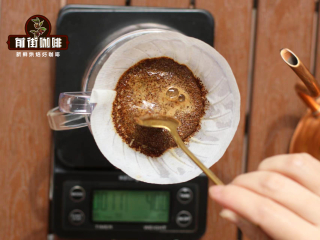
Shall I stir the coffee by hand? What are the stirring techniques?
Recently, when Qianjie was surfing the Internet, it was found that many hand-brewing enthusiasts like to add a mixing powder layer in the process of making coffee, hoping to improve the extraction of certain flavors, such as the sweetness of coffee. Is stirring really that effective? What do you pay attention to when using mixing techniques? Let's talk about hand coffee in front of the street today.

Yega Chefe, Ethiopia Yega Chefe Manor Cup holder
Ethiopian coffee beans taste Ethiopian coffee beans feature Ethiopian beans look a little malnourished. However, the appearance of beans, Ethiopian coffee can be ranked as the world's most citrus aroma, whether instant coffee or freshly ground coffee, the extraction will smell the pungent aroma of orange or lemon. The entrance is characterized by strong floral, fruity, sour and sweet aromas, but mellow.

Sun-dried Sidama Coffee Raw beans introduce the country of origin of Ethiopian coffee
(washed Sidamo raw beans) while the sun-exposed Sidamo beans are yellowish green, the beans are not neat, and it is common to lack carob beans. In the sun drying field in Sidamo, the coffee is placed in a hemp net wooden frame, and the workers turn it manually in turn in the sun, so that the coffee beans are heated evenly. (Sidamo Coffee Fruit Tree frame drying) properly treated sun Sidamo flavor is not discounted, except

Coffee brewing from the perspective of water, about taste perception
Following Cafe (Wechat official account vdailycom) found that the trigeminal nervous system (the triennial sensory system) of the trigeminal nervous system is unfamiliar to ordinary people, but recently there has been a lot of research work on how it affects people's perception of flavor. These nerve endings are widely distributed in the nasal meatus and oral cavity.

Xidamo producing area Coffee in China Coffee Network
According to the above four different modes of production, Ethiopian coffee can be divided into nine major coffee producing areas, including five boutique coffee areas: Sidamo, Yegashefi, Harald, Lim and Lekampu. and four general commercial bean producing areas: Gemma, Irugbo, Tibby and Bekaa. Sun or water washing methods are used in each district, and different treatment methods also affect

Grade analysis of Ethiopian coffee beans how to choose siphon coffee maker
Ethiopian coffee has the highest citrus aroma in the world. Whether instant coffee or freshly ground coffee, the aroma of orange or lemon can be smelled during extraction. The nose is characterized by strong floral, fruity, sour and sweet aromas, but the alcohol is slightly thicker or less dense. The biggest disadvantage is that it is easy to bake unevenly, especially sun-dried beans. Even the best Grade3 Harald sun-dried beans

The story of the flavor characteristics of Indonesian wet planing coffee beans
Professional coffee knowledge exchange more coffee bean information please follow the coffee workshop (Wechat official account cafe_style) which beans in Indonesia are wet shaved? What flavor does wet planing highlight? What is wet planing? Wet planing (Wet-Hulling), that is, when the raw beans are in the middle of the sun and the moisture content is as high as 30% 50%, the seed shells are removed before continuing.

Taste treatment of Sidamo Coffee Bean introduction to the description of Grinding scale Flavor in the region
Sidamo and Yega Xuefei, boutique coffee beans are grown organically and picked manually to ensure the health and quality of coffee. It is also worth mentioning that Sidamo coffee is low in caffeine, also known as natural decaffeinated coffee. (ripe Sidamo Coffee Fruit) {BKJ- Baika} Coffee Origin introduction to ┃ Sidamo Sidamo Caf é of Ethiopia

Raw Coffee Bean treatment-the fermentation effect of washing treatment and its effect on Coffee Flavor
Professional coffee knowledge exchange more coffee bean information Please pay attention to the coffee workshop (Wechat official account cafe_style) Fermentation is one of the important links in washing treatment. Relative to the sun treatment, the harvested coffee cherries will be dried directly together with the pulp and mucus layer. After the peel and pulp are removed, the coffee seeds with mucus will be dried naturally or artificially.

Where does Ethiopian coffee come from in Sidamo, Ethiopia? Ethiopia
According to the above four different modes of production, Ethiopian coffee can be divided into nine major coffee producing areas, including five boutique coffee areas: Sidamo, Yegashefi, Harald, Lim and Lekampu. and four general commercial bean producing areas: Gemma, Irugbo, Tibby and Bekaa. The sun or water washing methods are used in each district, and different treatment methods also affect the flavor.

Introduction to the grading system of Yejiaxuefei Coffee beans the characteristics of G1 flavor and taste of Yejiaxuefei coffee beans
Yega Xuefei Coffee rating Plan can be divided into five levels: Ethiopian beans are easily recognizable. Most of the beans are small and pointed long beans, the so-called longberry, and often mixed with small oval-shaped short beans, the so-called shortberry, looks uneven in size and uneven in appearance

Grade Analysis of Ethiopian Coffee beans
Ethiopian coffee beans are divided into five levels. The first and second stages are washed beans. Washed beans Grade1 represents 3 defective beans per 300g raw beans, and Grade2 represents 4 defective beans per 300g. Gradc1 grade water washed beans are very rare and are generally difficult to buy. At present, all the washed beans exported from Ethiopia are Grade2 grade. The quality of sun-dried beans is Grade3 and Grad in order.

What are the storage methods of raw coffee beans? how long can the raw coffee beans be kept?
When the raw coffee beans are not roasted, the color is relatively light, while the roasted beans will be darker when the seeds have been taken out, and then the drying process is carried out. It is best to lay the floor for the sun to dry, and the flavor is better. But if it rains, it can also be dried by machine, but the temperature should be controlled. Dry and then polish. Generally speaking, washed beans are blue-green and beautiful in appearance.

Common sense of Coffee in Sidamo producing area of Ethiopian Coffee
According to the above four different modes of production, Ethiopian coffee can be divided into nine major coffee producing areas, including five boutique coffee areas: Sidamo, Yegashefi, Harald, Lim and Lekampu. and four general commercial bean producing areas: Gemma, Irugbo, Tibby and Bekaa. The sun or water washing methods are used in each district, and different treatment methods also affect the flavor.

Is semi-washing the same as wet planing? What's the difference between them?
Professional coffee knowledge exchange more coffee bean information Please pay attention to the coffee workshop (Wechat official account cafe_style) semi-washing method is a relatively new and quite rare method. This method is also suitable for processing local coffee only in specific areas of some countries where there is a long drying period in the climate. The coffee produced by this method is sticky, while

There are several ways to teach you how to wash raw coffee beans.
Coffee raw beans are the state of coffee beans before they are roasted, and the processing process of coffee raw beans is more troublesome. Today we will talk about how to wash coffee raw beans, that is, the step of washing coffee raw beans.
Japanese researchers have found that caffeine treats xerophthalmia
In recent years, studies have shown that drinking coffee can reduce cancer and glycosuria.

Coffee extraction sequence Coffee how to extract Oil Coffee the Best extraction
Professional coffee knowledge exchange more information about coffee beans Please follow the coffee workshop (official Wechat account cafe_style) the first compounds extracted from coffee are acids and fats. Acid is the simplest compound that produces a sour taste, so water can easily dissolve it in liquid coffee. From a chemical point of view, it is not particularly easy to increase the body's oil in coffee. Phase

World boutique Coffee Manor beans: a detailed introduction of beans from Sidamo, Ethiopia
According to the above four different modes of production, Ethiopian coffee can be divided into nine major coffee producing areas, including five boutique coffee areas: Sidamo, Yegashefi, Harald, Lim and Lekampu. and four general commercial bean producing areas: Gemma, Irugbo, Tibby and Bekaa. The sun or water washing methods are used in each district, and different treatment methods also affect the flavor.

Coffee Common sense Coffee Bean Grade Analysis in Ethiopia
Ethiopian coffee beans are divided into five levels. The first and second stages are washed beans. Washed beans Grade1 represents 3 defective beans per 300g raw beans, and Grade2 represents 4 defective beans per 300g. Gradc1 grade water washed beans are very rare and are generally difficult to buy. At present, all the washed beans exported from Ethiopia are Grade2 grade. The quality of sun-dried beans is Grade3 and Grade4 in order.